
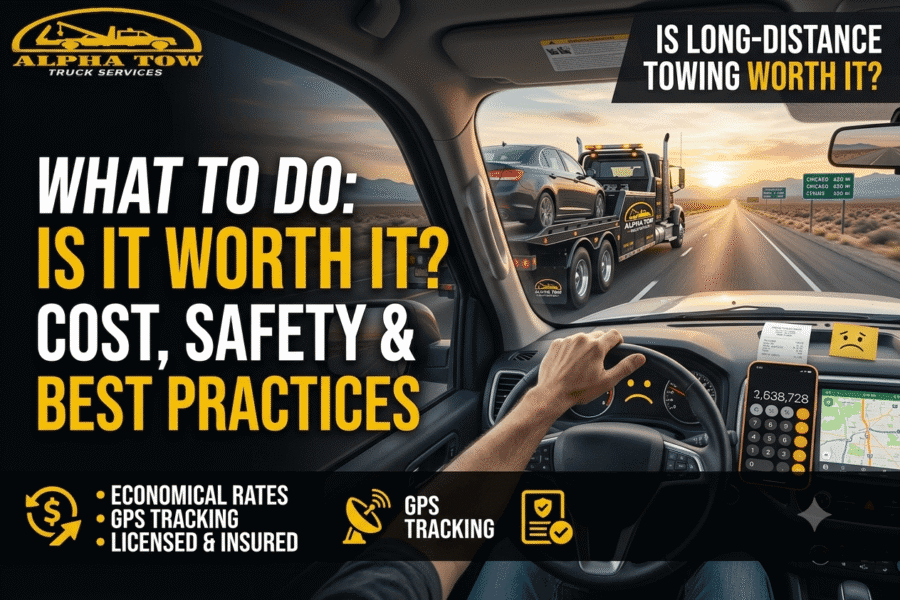
Moving a vehicle across the state, or across the country, isn’t the same decision as calling for a quick local tow. The cost is higher, the vehicle spends far more time in transit, and there’s a lot more that can go wrong if the wrong company or the wrong method is used. So the question drivers reasonably ask before committing is simple: is long-distance towing actually worth it?
This guide walks through what a long distance towing service actually involves, what it typically costs, how to evaluate safety and reliability before you book, and the best practices that separate a smooth transport from an expensive headache.
Long-distance towing is worth it when driving the vehicle yourself isn’t practical or safe — a non-running vehicle, a car you’re relocating without driving, an inherited or purchased vehicle from out of state, or a specialty vehicle you don’t want to put extra miles on. It typically costs more per mile than a local tow but less than the value of your time, fuel, wear, and risk of driving an unreliable vehicle long distance. The key to making it worth it is choosing a provider with flatbed equipment, transparent pricing, and verifiable insurance and licensing.
What Is Long-Distance Towing, Exactly?
Long-distance towing, sometimes called interstate towing or vehicle transport, moves a vehicle well beyond a typical local tow radius — often hundreds or thousands of miles, sometimes across multiple states.
Unlike a short local tow, this is almost always done using flatbed equipment, since keeping all four wheels off the road is essential to avoid the cumulative wear that comes from any wheels rolling over a long distance.
It’s commonly used for non-running vehicles being relocated, vehicles purchased or inherited out of state, classic and collector cars that shouldn’t accumulate extra highway miles, and situations where a breakdown happens far from home and driving the vehicle further simply isn’t safe.
What Does Long-Distance Towing Cost?
Pricing for a long distance tow is generally structured around a combination of a base dispatch fee and a per-mile rate, with the per-mile cost typically decreasing somewhat as distance increases. Vehicle type, weight, and condition all factor in — a non-running luxury SUV costs more to transport than a small operable sedan, both because of the equipment required and the added care involved.
A reputable long distance towing service will give you a clear, itemized quote before dispatch, not a vague estimate that changes once the truck arrives. If a company won’t commit to a number until your vehicle is already loaded, that’s a signal to look elsewhere.
Is It Actually Worth It? Weighing the Real Alternatives
Driving It Yourself
If the vehicle runs reliably, driving it yourself is typically the cheapest option on paper. But it comes with real costs that are easy to underestimate: your time, fuel, meals, potential lodging for a multi-day trip, added mileage and wear, and the risk of a breakdown along the way in an unfamiliar area.
Shipping Through a Broker
Vehicle shipping brokers can sometimes offer competitive rates by bundling your vehicle with others on an open or enclosed trailer, but this often means a less flexible pickup window and less direct communication with the actual driver handling your vehicle.
A Dedicated Long-Distance Towing Service
A direct, flatbed-equipped tow gives you a dedicated vehicle, a specific pickup and delivery window, and — critically — a vehicle that never touches the road during transport. For a non-running vehicle, an AWD car, or anything you don’t want accumulating extra miles, this is usually the safest and most predictable option, even at a somewhat higher price point.
How to Evaluate Safety Before You Book
- Confirm the company uses flatbed equipment for long-distance moves, not a hook-and-chain or basic wheel-lift setup
- Ask about insurance coverage for your vehicle during transit, and get it in writing
- Verify licensing — a legitimate interstate towing operation should be able to confirm this without hesitation
- Ask how the vehicle will be secured — proper strapping at multiple points, not just a single chain
- Request a realistic transit timeline, including how far the truck typically travels per day
Best Practices Before You Request a Quote
Document your vehicle’s condition
Take clear photos of your vehicle from multiple angles, including any existing damage, before pickup. This protects you if any dispute arises about the vehicle’s condition at delivery.
Remove personal belongings
Most towing insurance policies only cover the vehicle itself, not personal items left inside. Clear out anything valuable or important before pickup.
Get everything in writing
A trustworthy long distance tow provider will confirm pricing, pickup and delivery windows, and insurance details in writing before your vehicle is ever loaded — not verbally promised and forgotten.
Ask about drivetrain-specific handling
If your vehicle is AWD or 4WD, confirm the provider is using flatbed transport specifically, since these vehicles can suffer drivetrain damage if towed any other way over long distances.
Confirm communication during transit
A reliable provider should be reachable for updates during a multi-day transport, not unreachable until the vehicle simply shows up.
What Makes a Long-Distance Towing Company Trustworthy
Trust in this industry comes down to a few concrete things you can actually verify, rather than taking a company’s word for it. Transparent, written pricing before dispatch is the first sign. Verifiable insurance coverage for your vehicle during transit is the second. A real answer to questions about equipment, licensing, and experience with your specific vehicle type is the third. And a company willing to walk you through the entire process before you commit — rather than rushing you toward a booking — is usually the clearest sign you’re dealing with a provider that has nothing to hide.
How Long-Distance Towing Works, Step by Step
Understanding the actual process makes it much easier to evaluate whether a provider is handling your vehicle correctly.
You request a quote
You provide pickup and delivery locations, vehicle details, and condition. A legitimate long distance towing service gives you an itemized quote based on this information, not a vague range.
Pickup is scheduled and confirmed
A specific pickup window is set, along with an estimated delivery window based on distance and the provider’s typical daily travel range.
Vehicle inspection and documentation
At pickup, the driver should document your vehicle’s condition, ideally with photos, and provide you with a copy. This protects both you and the company if any question arises at delivery.
Flatbed loading and securing
Your vehicle is loaded onto a flatbed platform and secured at multiple points with straps or chains rated for its weight. All four wheels stay off the road for the entire transport.
Transit and communication
For multi-day moves, a reliable provider stays reachable for status updates. You should know roughly where your vehicle is and when to expect delivery, rather than being left in the dark until it shows up.
Delivery and final inspection
At delivery, compare your vehicle’s condition against the pickup documentation before signing off, and address any concerns immediately rather than after the driver has left.
Common Mistakes to Avoid
- Choosing based on price alone without confirming insurance coverage
- Skipping photo documentation of your vehicle’s condition before pickup
- Not asking whether your specific vehicle type requires flatbed transport
- Leaving personal belongings inside the vehicle, assuming they’re covered
- Accepting a verbal quote instead of getting pricing and terms in writing
FAQs: Long-Distance Towing
How much does long-distance towing typically cost per mile?
Per-mile rates vary by provider, vehicle type, and distance, generally decreasing somewhat for longer moves. Always request an itemized quote based on your specific vehicle and route rather than relying on a general estimate.
How long does a long-distance tow usually take?
Transit time depends on distance and the provider’s daily travel range, but a reputable company will give you a realistic window upfront based on your specific route.
Is my vehicle insured during long-distance transport?
It should be — always confirm coverage details and get them in writing before your vehicle is loaded, rather than assuming it’s automatically covered.
Should AWD or 4WD vehicles be towed differently for long distances?
Yes. These vehicles should always be flatbed transported for long-distance moves to avoid drivetrain damage from any wheels rolling over extended mileage.
What should I remove from my vehicle before a long-distance tow?
All personal belongings and valuables — most transit insurance only covers the vehicle itself, not items left inside it.
The Bottom Line
Long-distance towing is worth it in exactly the situations where driving isn’t practical or safe — a non-running vehicle, an out-of-state purchase, a specialty car you don’t want accumulating miles on, or simply a breakdown too far from home to reasonably continue. The real key to making it worth the cost is choosing a provider with transparent pricing, verifiable insurance, and flatbed equipment suited to your specific vehicle.
If you’re weighing a long-distance move for your vehicle, Alpha Tow Truck Services offers flatbed-equipped long distance towing with upfront, written pricing and verified insurance coverage — reach out anytime, 24/7, to talk through your specific situation before you request a final quote.