
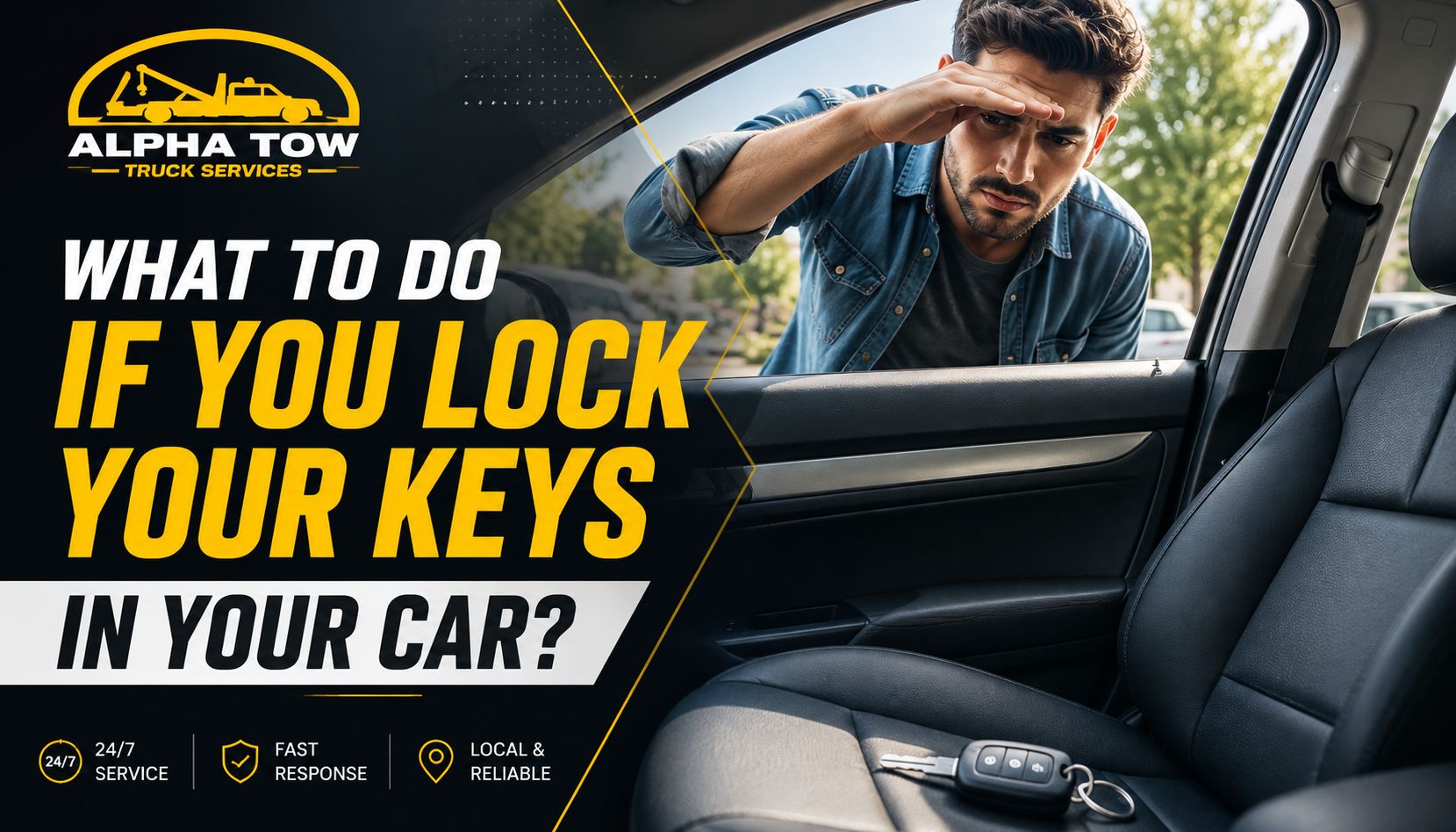
Realizing you’ve locked your keys inside the car can turn a normal day into a stressful situation, especially if you’re in a parking lot, late for work, or stuck somewhere unfamiliar.
The good news is that you may have a few safe options to try before calling for help. But if none of them work, a professional car lockout service can usually get you back into the vehicle without relying on risky DIY methods.
What Should You Do If You Lock Your Keys in the Car?
If you’ve locked your keys in the car, first check whether another door, trunk, or hatch is unlocked. If you have a spare key, use it or ask someone who has access to it to bring it. You can also check whether your vehicle manufacturer’s app or roadside assistance program offers remote unlocking. If those options aren’t available, avoid forcing the door open and contact a professional car lockout service.
The safest solution depends on the vehicle, location, and situation.
1. Stay Calm and Check Every Door
It sounds obvious, but start with the simplest option.
Walk around the vehicle and check all passenger doors, the driver’s door, and the rear hatch or trunk if applicable. Sometimes one door may remain unlocked even when you assume the entire vehicle is locked.
Don’t pull aggressively on the handles or try to force a door open.
Modern vehicles use different locking systems, and forcing a door can damage the weather stripping, lock mechanism, window, or door frame.
A quick check costs nothing and could save you a service call.
2. Check Whether You Have a Spare Key
If you have a spare key at home, with a family member, or somewhere accessible, this may be the easiest solution.
Consider who might be able to bring it to you.
For fleet vehicles or company cars, a spare key may be stored at a dispatch office or with a fleet manager. Some businesses also maintain spare keys for drivers who operate shared vehicles.
If the spare key is several miles away and you’re in an emergency situation, however, waiting for it may not be practical.
3. Try Your Vehicle’s Manufacturer App
Some newer vehicles offer remote locking and unlocking through a manufacturer’s smartphone app or connected-vehicle service.
Depending on the vehicle and subscription, the app may allow you to:
- Lock or unlock the doors
- Locate the vehicle
- Check vehicle status
- Request roadside assistance
Not every vehicle supports remote unlocking, and some services require the account to be set up before you become locked out.
If you already have the manufacturer’s app configured, it’s worth checking before arranging outside assistance.
4. Check Your Roadside Assistance Coverage
Your car insurance, auto club membership, vehicle warranty, or manufacturer program may include roadside assistance.
Lockout assistance is commonly offered as one of the services under roadside assistance programs, although coverage, limits, and eligibility vary.
Check your policy or membership information if you have access to it.
If you’re somewhere safe and can wait, using an included roadside benefit may make sense. If you’re in an unsafe location or need immediate assistance, you may need to consider other options.
5. Don’t Try to Force the Door Open
A common reaction to being locked out is to look for a way to physically open the vehicle.
This is where a simple lockout can become an expensive repair.
Using objects to pry the door open can potentially damage:
- Door frames
- Weather stripping
- Windows
- Lock mechanisms
- Electrical wiring
- Airbags or sensors located within the door area
Even if you manage to create a small opening, that doesn’t mean you’ve solved the problem safely.
A vehicle door is not designed to be opened by forcing the frame apart.
6. Avoid Unverified DIY Lockout Tricks
You may find online videos showing different methods for opening locked vehicles.
The problem is that a method that works on one older vehicle may not be appropriate for a newer vehicle with a completely different locking system.
Modern cars can contain electronic locks, alarm systems, sensors, side-impact components, and other equipment that make improvised entry risky.
If you don’t know exactly how your vehicle’s locking system works, experimenting with it can cause more damage than the original lockout.
7. Consider Your Immediate Safety
Your location matters.
Being locked out of your car in your own driveway is inconvenient. Being locked out beside a highway at night is a different situation.
If you’re in an unsafe location:
- Move to a safe area if possible.
- Stay away from moving traffic.
- Turn on hazard lights if you can safely access them.
- Keep your phone charged and available.
- Don’t accept assistance from strangers if you’re uncomfortable.
- Contact emergency services if there is an immediate threat to your safety.
If a child, vulnerable person, or animal is locked inside the vehicle, the situation becomes much more urgent.
What If a Child or Pet Is Locked Inside?
If a child, pet, or another vulnerable person is trapped inside a locked vehicle and there is a risk of heat exposure or other immediate danger, don’t treat it like an ordinary lockout.
Call emergency services immediately and explain the situation.
Heat can build rapidly inside a vehicle, even when outdoor temperatures don’t initially seem extreme. A professional lockout provider may also be able to assist, but an immediate safety emergency should be treated as an emergency first.
When Should You Call a Car Lockout Service?
If you’ve checked the doors, don’t have a spare key, can’t use remote unlocking, and don’t have a practical roadside assistance option, calling a professional car lockout service is usually the safest next step.
Professional lockout technicians have specialized tools and training designed to gain access to vehicles while minimizing the risk of damage.
This is particularly useful when:
- The keys are clearly visible inside the vehicle.
- The vehicle is fully locked.
- You have a newer vehicle with electronic locks.
- The key is inside the trunk.
- The vehicle has a complex security system.
- You are in an unfamiliar or unsafe location.
- You need help quickly.
The technician may first confirm that you are authorized to access the vehicle before beginning the service.
How Does Professional Car Lockout Assistance Work?
A professional lockout technician generally starts by identifying the vehicle and determining what type of locking system it uses.
They may ask for information such as:
- Vehicle make
- Model
- Approximate year
- Your location
- Whether the keys are inside the vehicle
- Whether the vehicle is running
- Whether there is an additional problem with the key or lock
The technician then chooses an appropriate entry method based on the vehicle.
The goal is to unlock the vehicle without unnecessary damage.
The exact procedure varies because a basic older vehicle and a newer vehicle with advanced electronic security should not necessarily be handled the same way.
How Much Does a Car Lockout Service Cost?
The cost of a car lockout service can vary depending on factors such as location, time of day, vehicle type, distance, and the complexity of the lockout.
Emergency or after-hours service may have different pricing from standard daytime service.
Before agreeing to service, ask the provider for the expected price or pricing structure.
A reputable provider should be able to explain what the quoted price includes and whether there are additional charges.
How Long Does a Car Lockout Take?
A straightforward vehicle lockout can often be resolved relatively quickly once the technician arrives.
However, total wait time depends on the provider’s current workload, traffic, distance, location, weather, and the type of vehicle involved.
When requesting service, provide an accurate location and vehicle information. This helps the provider determine what equipment and technician may be appropriate for the job.
What Information Should You Give the Lockout Technician?
When you call for car lockout assistance, give the technician enough information to understand the situation.
Tell them:
- Your exact location
- Vehicle make and model
- Approximate vehicle year
- Whether the keys are inside
- Whether the vehicle is running
- Whether the keys are in the trunk
- Whether anyone is trapped inside
- Whether you’re in an unsafe location
If you know your vehicle has a special locking system, mention that as well.
Clear information can help the technician prepare before arriving.
What Not to Do When You’re Locked Out
When you’re stressed, it’s easy to make a quick decision that creates another problem.
Avoid:
- Breaking a window unless there is a genuine emergency requiring immediate entry.
- Prying the door frame apart.
- Using random tools to manipulate the lock.
- Following questionable online lockout techniques.
- Pulling aggressively on doors or windows.
- Attempting repairs to the locking system without the right equipment.
- Giving personal information to an unverified service provider.
A professional lockout is usually less expensive than repairing a damaged door or window.
Frequently Asked Questions
Q. What should I do first if I lock my keys in my car?
A. Check every door and the trunk or hatch, then see whether you have access to a spare key or vehicle manufacturer’s remote-unlock service. If those options aren’t available, contact a professional car lockout service rather than forcing the door open.
Q. Can I unlock my car without a key?
A. Some vehicles can be remotely unlocked through a manufacturer’s app or connected service. Otherwise, a professional lockout technician may be able to unlock the vehicle using specialized equipment designed for that particular type of locking system.
Q. Can I use a coat hanger to unlock my car?
A. It’s generally better not to. Improvised tools can damage the vehicle’s door, weather stripping, wiring, locking mechanism, or other components. Modern vehicles can also use locking systems that make old DIY techniques ineffective or risky.
Q. How do I get my keys out of a locked car?
A. If the vehicle is locked and you don’t have a spare key or remote-unlock option, a professional car lockout technician can provide vehicle entry assistance. Avoid trying to pry open the door yourself.
Q. Can a locksmith unlock a car without damaging it?
A. Professional automotive locksmiths and lockout technicians use specialized tools and techniques intended to minimize the risk of vehicle damage. The exact method depends on the vehicle’s make, model, year, and locking system.
Q. Should I call roadside assistance or a lockout service?
A. Check whether your insurance, auto club, warranty, or manufacturer program includes lockout assistance. If it doesn’t, or if you need another option, you can contact a local professional car lockout service directly.
Q. What if my car is running and the keys are locked inside?
A. Don’t try to force the vehicle open. If you don’t have remote unlocking or a spare key available, contact a professional lockout provider. If the vehicle is running in an enclosed space, move to fresh air and treat the situation as a potential safety concern.
Final Takeaway
Locking your keys inside your car is frustrating, but it doesn’t mean you need to damage the vehicle to get back inside.
Start with the simplest options: check every door, look for a spare key, check your manufacturer’s app, and review your roadside assistance coverage. If none of those options work, a professional car lockout service can provide a safer solution.
Most importantly, don’t let the frustration of being locked out lead to an expensive DIY mistake. If the vehicle is in an unsafe location or someone vulnerable is trapped inside, prioritize safety and get immediate help.